|
|
|
|

|
Photo Equipment |
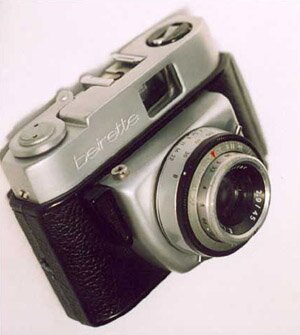 |
The first camera I had was the Beirette vs for 35 mm film. Every photo ever made with this camera has disappeared into oblivion. |
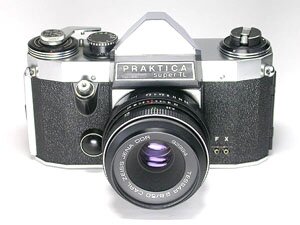
| The simple but efficient Praktica Super TL was my very first SLR, bought in the early 1970's. I used a 135 and 300 mm lens on it, I think they were Panagor lenses. I only used Ilford black/white negative film at that time. After the camera and lenses where stolen in New York City in 1973, I gave away all negatives to a fellow spotter. So, again, I have no pictures made with this camera. |
 |
 |
I then bought a Mamiya/Sekor 1000DTL. I know that I had my first zoomlens on this camera, but please don't ask what it was. All I remember is, it had two wide rings, one for zooming and one for focusing. At the same time I started to use Kodachrome 25 film and some slides are now digitized and on this website. The first ever with this camera: 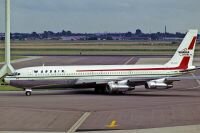 |
| The next camera was a giant leap forward. From the P-mount to an "easy" rotating ring at the bottom of the Canon FD-lens... I bought the Canon EF around 1976/1977. It came with the then standard 1.8/50 lens and I used a Panagor zoomlens on it. It's now in a museum. |
 |
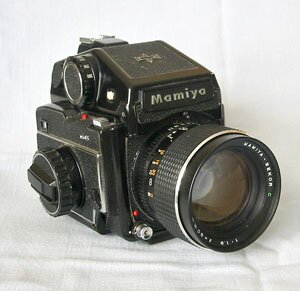 |
Around 1979/1980 I also had a Mamiya m645. This camera used 120-roll film for 6x4.5 cm format negtives. I never used it for aviation photos, only for weddings, portraits, things like that, and I sold it after a few years. |
| After that came the more "electronic" cameras, the Canon A1 with a motordrive. |
 |
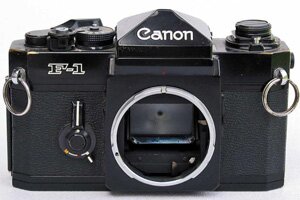 |
And a Canon F-1n for single shots (K25 was never cheap). |
| One of the lenses I used I still remember, the Canon new FD 70-210 mm, very easy to use. The locking pin was still on the lens, not on the camera. |
 |
   |
I also used 17 mm, 24 mm and 35-70 mm on those cameras (can't remember if it was 1:3.5-4.5 or 1:4 for the latter). All had the new FD lensmount and the aperture ring could be locked in automatic mode. |
| For the real long distance I had a Panagor 400 mm. |  |
 |
Wanting auto-focus, I switched to Minolta. I wish I had never done that, today I can't even remember the lenses. I had two bodies, Dynax 700si but these cameras were just not it. I soon changed back to Canon, this time into the digital era: |
| The Canon EOS 300D. My first digital SLR, it came with the EF-S 18-55mm lens. |
 |
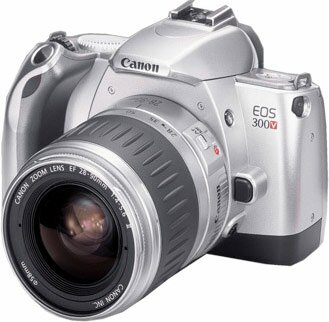 |
Even though I bought the Canon 300V with a Canon EF 28-90 mm lens, I went strictly digital. The 300V was never used and I gave it to a museum. |
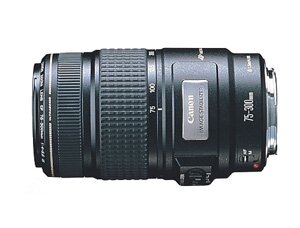
| For aviation photography I immediately added the Canon EF 75-300mm IS. |
 |
 |
Another similar digital body (branded Digital Rebel), imported by my supplier, was soon added. |
| When I bought the EF 100-400 mm L IS USM... |  |
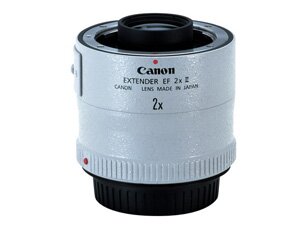 |
together with the 2x extender, the 300D and Digital Rebel proved to be too slow and I sold them, together with the 18-55 mm and 28-90 mm lenses. |
| The first replacement was the Canon 30D. |  |
 |
Very soon the Canon 40D was also added. |
| Replacing the "old glass" I now use the EF-S 17-85 mm, | 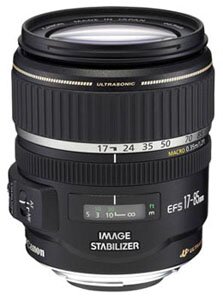 |
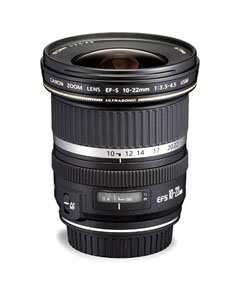 |
and the EF-S 10-22 mm. |
| I also had a Powershot G7, which proved to be very useful in dark museums/hangars, especially when taking pictures at close range. |
 |
 |
The faster and lighter EF 70-300 mm IS USM replaces the 75-300. |
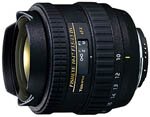
| My wife allows me to use her Tokina 10-17mm Fish-Eye lens. |
 |
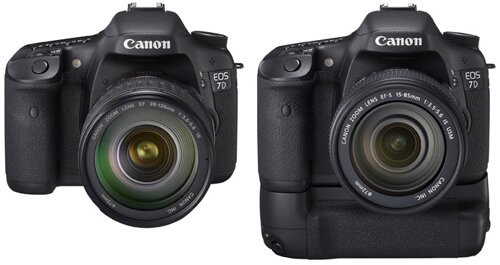 |
The 30D and the 40D are gone. I now use two 7D's, one with a battery-grip. |
| Recently a Canon 5D Mark III was added |  |
 |
together with an EF 28-135 mm IS USM. |
| To scan the slides I have made since 1973 I used the Pacific Images PrimeFilm 1800i. |
 |
 |
Later I got myself one of the very last Nikon Coolscan 5000ED just before they were sold out after production was stopped. |
| Sitemap | © ABCDlist |  |

